
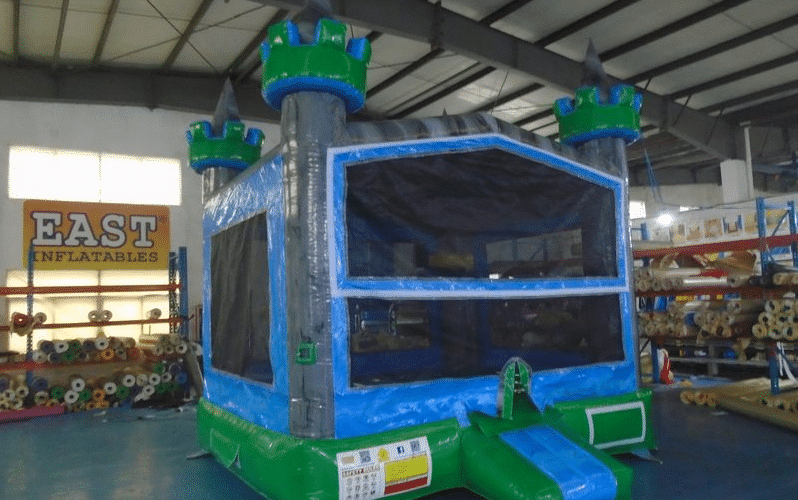
When temperatures hit 95°F, the dark or bright vinyl of a bounce house can quickly reach temperatures that cause surface burns on a child’s skin. If you are hosting an event in the heat of a U.S. summer, you need more than just hope—you need a cooling strategy.
Here is the professional guide on how to keep your inflatable cool, safe, and fun when the heat is on.
1. The Strategy of “Pre-Cooling” and Shading
The best way to handle 95°F heat is to prevent the sun from hitting the vinyl in the first place.
- Strategic Placement: If possible, set up the unit in the natural shade of large trees or the shadow of a tall building. Even partial shade during the peak hours (11 AM – 4 PM) makes a 20-degree difference in surface temperature.
- Pop-Up Tents: If you have 10×10 or 10×20 pop-up tents, place them near the entrance and exit. This provides a “cooling zone” for kids waiting their turn and keeps the most-touched part of the vinyl out of the direct sun.
- The Tarp Trick: When the unit is not in use (like during lunch or a break), throw a light-colored, reflective tarp over the jumping surface. This reflects the UV rays instead of absorbing them.
2. Using Water Wisely (Wet vs. Dry Units)
Water is the most effective cooling agent, but you must know what kind of unit you have.
For “Wet/Dry” Inflatables:
- Continuous Mist: Set your garden hose to a “mist” setting rather than a full blast. A light, consistent misting keeps the vinyl slick and cool to the touch without flooding the yard.
- Soaker Hoses: Many commercial units have built-in misting systems. Ensure these are running 10 minutes before kids enter to bring the initial temperature down.
For “Dry-Only” Inflatables:
- Do NOT use a hose: If a unit is not rated for water, adding water can make it dangerously slippery and cause “mold-rot” in the seams later.
- The “Damp Cloth” Wipe: You can quickly wipe down the high-traffic areas with a damp, cool towel every 30 minutes. The evaporation will briefly cool the surface without soaking the internals.
3. Airflow: The Internal Cooling Secret
The air inside the bounce house is being pushed by a blower that is sucking in 95°F air.
- Blower Placement: Ensure the blower is sitting in the shade. If the blower is in direct sun, it’s sucking in scorching air and pumping it into the unit.
- Ventilation: Ensure all mesh windows and “safety exits” are fully clear and unobstructed. You want as much cross-ventilation as possible to prevent the interior from becoming an oven.
4. The “Sock Rule” and Safety Gear
Sometimes the easiest way to protect the kids is to put a barrier between them and the vinyl.
- Mandatory Socks: In the heat, bare feet on vinyl is a recipe for blisters. Require all jumpers to wear light-colored socks. This protects the soles of their feet from the hot surface.
- Long Sleeves/Leggings: If it’s a high-friction slide, light “wicking” athletic wear (like Under Armour) can prevent skin-to-vinyl contact, reducing both heat transfer and friction burns.
5. Frequently Asked Questions (FAQ)
Q: At what temperature is it too hot for a bounce house?
A: If the ambient temperature is 95°F, the vinyl can easily exceed 130°F. If you can’t hold the back of your hand against the vinyl for 5 seconds without discomfort, it is too hot for children.
Q: Does white vinyl stay cooler than blue or red?
A: Yes. Darker colors (blue, green, purple) absorb significantly more thermal energy. If you are buying or renting for a summer party, look for units with white or yellow tops.
Q: Can I put a fan inside the bounce house?
A: No. Electric fans inside a jump area are a massive safety hazard. Focus on shading the blower and ensuring the unit’s built-in ventilation is open.
Conclusion
Managing 95°F heat is all about Shade, Airflow, and Barriers. If you can keep the sun off the vinyl and the kids in socks, you can keep the party going safely. Always keep a digital infrared thermometer on hand—they allow you to test the surface temperature instantly to ensure it stays in the “safe zone” (under 110°F for skin contact).