
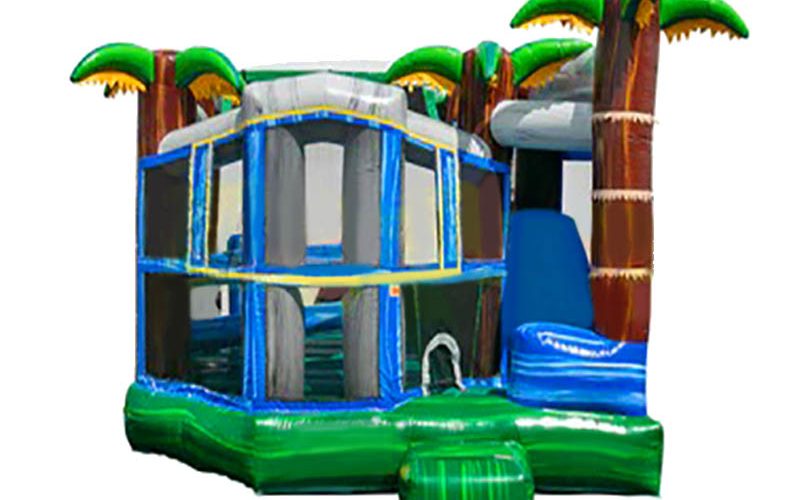
For new business owners in the inflatable rental industry, the price gap between equipment can be staggering. You might find two water slides that look identical in photos, but one costs $1,500 while the other is $3,000.
The question is: Is the extra investment actually worth it, or are you just paying for a brand name? In the U.S. market, where liability, durability, and safety are paramount, the answer usually lies beneath the surface of the vinyl. Here is why investing in premium commercial equipment pays off in the long run.
1. The True Cost of “Cheap” Vinyl
Lower-priced inflatables often cut costs in the most critical area: the material.
- The Premium Standard: High-end units use 0.55mm (18oz) lead-free PVC, which is UV-treated and anti-tear.
- The Cheap Alternative: Budget units may use thinner material or “blended” vinyl that becomes brittle after just one season in the American sun.
When you invest in a unit from a reputable professional line like EastJump, you are paying for vinyl that maintains its structural integrity through hundreds of rental cycles, whereas a cheap unit may begin to leak air or “stretch” after only a dozen uses.
2. Safety Standards & Liability
In the United States, insurance companies and state inspectors are strict about safety.
- Reinforced Seams: Expensive units feature triple or quadruple stitching in “stress points” (like the entrance and slide peaks).
- Compliance: Premium manufacturers ensure their designs meet ASTM F2374 standards.
Using equipment that is built to last, such as the designs found in the EastJump catalog, significantly reduces the risk of seams popping while children are inside—a disaster that can lead to lawsuits far more expensive than any initial purchase price.
3. Maintenance: Hidden Savings
Premium inflatables are designed for the “busy rental owner.” They often include features that save you time and money on repairs:
- Replaceable Parts: High-quality slides come with replaceable slide covers and stair liners. When these high-traffic areas wear out, you don’t replace the whole slide—just the cover.
- Better Zippers: Commercial-grade deflation zippers with protective flaps make setup and teardown faster, saving you man-hours every weekend.
4. Resale Value: The Exit Strategy
The rental business is about asset management. A “cheap” inflatable has almost zero resale value after two years because it is often at the end of its life. Conversely, a well-maintained, high-quality unit from a trusted brand like EastJump can often be sold for 50% to 60% of its original value even after three years. This makes the “expensive” unit much cheaper over its total lifecycle.
Frequently Asked Questions (FAQ)
Q: Can I start my business with budget-grade inflatables?
A: You can, but expect to replace them within 1-2 years. For a sustainable business, “mid-to-high” range units offer the best ROI.
Q: Do expensive bounce houses attract better customers?
A: Yes. Higher-quality, better-looking units allow you to charge higher rental fees. Customers in premium neighborhoods are often willing to pay more for equipment that looks clean, safe, and professional.
Q: What is the most important “premium” feature to look for?
A: Look for “heat-welded” seams on water units and 100% lead-free, fire-retardant PVC.
Summary: Think Like a Business Owner
In the inflatable industry, your equipment is your income. Buying an “expensive” commercial unit isn’t just a purchase; it’s a strategy to minimize repairs, lower liability, and maximize resale value.
While there are many brands available, choosing an established provider known for American-market standards, such as EastJump, ensures that your “extra money” is going into the density of the vinyl and the safety of the children—investments that always pay back in full.