
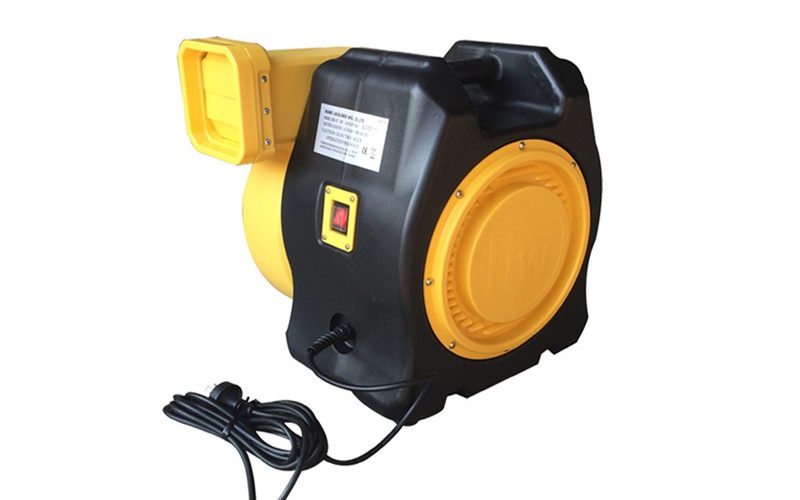
It’s a frustrating scenario: the party is in full swing, the kids are ready to jump, but your inflatable blower suddenly cuts out because the circuit breaker tripped. Understanding why this happens is key to maintaining a safe and uninterrupted event.
In the US market, most residential outdoor outlets are on a 15-amp or 20-amp circuit. When an inflatable blower—which pulls a significant amount of “initial surge” and “running” wattage—competes with other appliances, the breaker flips to prevent overheating and potential fires.
Here are the most common reasons your breaker keeps tripping and how to solve them.
1. Overloaded Circuit
This is the most frequent culprit. A standard 1.0 HP or 1.5 HP blower can pull between 7 and 12 amps. If that same circuit is powering a slow cooker, outdoor lights, or a stereo system, the total draw will quickly exceed the 15-amp limit.
- The Fix: Ensure the blower is on a dedicated circuit. Unplug all other electronics on that specific breaker line while the inflatable is in use.
2. Using the Wrong Extension Cord
Inflatable blowers require a high volume of current. If you use a thin, “household-grade” orange extension cord, the wire creates too much resistance. This causes the motor to work harder, draw more amps, and heat up the circuit.
- The Fix: Only use a 12-gauge (12/3) or 10-gauge (10/3) heavy-duty extension cord. Keep the length under 50 feet whenever possible; longer cords result in “voltage drop,” which triggers the breaker.
3. Faulty GFCI Outlets
Under US building codes, outdoor outlets must be GFCI (Ground Fault Circuit Interrupter) protected. These are highly sensitive to moisture or “leakage” in the electrical current. If there is dew on the grass, a light drizzle, or a tiny nick in the blower’s power cord, the GFCI will trip instantly for safety.
- The Fix: Inspect the power cord for any exposed wires. Ensure all connections are kept in a waterproof “cord shield” box if the ground is damp.
4. Blower Motor Issues
If the breaker trips the second you flip the switch, there may be a short circuit inside the blower itself. This often happens if the internal capacitor has failed or if the motor windings are damaged from years of heavy use.
- The Fix: Test the blower on a different circuit (like a kitchen outlet, which is usually 20-amp). If it trips that breaker too, the blower likely needs professional repair or replacement.
5. High Ambient Temperature
In many parts of the US, summer temperatures can soar. If the blower is placed in direct, scorching sunlight, it can cause the internal thermal protector to trip to prevent the motor from burning out.
- The Fix: Place the blower in a shaded, well-ventilated area whenever possible to keep the motor cool during operation.
Pro-Tips for a Smooth Setup
- Check the Breaker Panel: Look for a “20” on the switch. 20-amp circuits handle commercial blowers much better than the older 15-amp standard.
- Startup Sequence: If you are running multiple blowers for a large water park or obstacle course, turn them on one at a time. The “startup surge” is when the amperage is highest.
- Quality Matters: Investing in high-quality equipment designed for the US power grid is the best way to avoid downtime.