
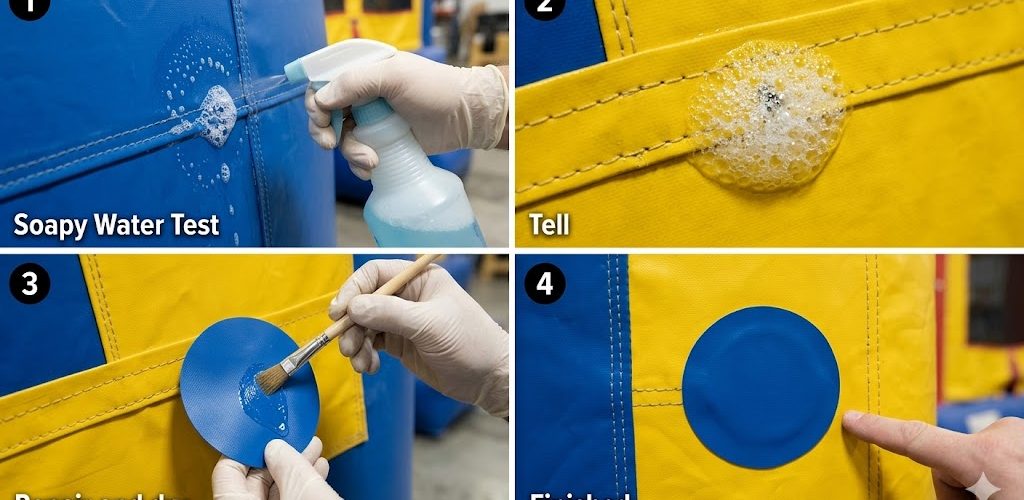
Finding a pinhole leak in a commercial bounce house can be one of the most frustrating maintenance tasks for rental fleet operators. Unlike a large tear, these micro-punctures are often invisible to the naked eye. However, they can cause a unit to lose critical PSI (air pressure), potentially leading to safety hazards, decreased stability, and failing state inspections.
For US rental fleet owners, maintaining the structural integrity of your heavy-duty 18oz vinyl (0.55mm PVC) is key to business longevity. Even a “tiny” leak at a high-stress seam can increase blower strain or eventually turn a 5-minute fix into an expensive, major blowout.
Here is a step-by-step professional guide to tracking down those elusive micro-leaks.
1. The “Soapy Water” Test (The Industry Gold Standard)
This is the most reliable, cost-effective method used by professionals to turn an invisible air leak into a visible signal.
- The Mix: Fill a spray bottle with a solution of water and a few tablespoons of a mild, concentrated dish soap (like Dawn). Avoid using harsh chemical detergents, as these can degrade the UV coating on high-quality PVC over time.
- The Process: While the commercial inflatable is fully pressurized, spray the soapy water liberally over the suspected area. Focus intensely on all triple-stitched seams, corner reinforcements, and high-wear points.
- The Tell: If there is a micro-puncture, the escaping air will immediately react with the soapy solution, creating a cluster of distinct, growing bubbles or white, foamy froth.
2. The “Listen and Feel” Technique
In a controlled warehouse or a quiet outdoor setting, you can often narrow down the general location before reaching for your spray bottle.
- Sound: Walk slowly around the inflated unit. A small, persistent hiss usually indicates a puncture in the PVC wall, while a lower rushing sound points to a different type of issue, such as a loose deflation zipper flap.
- Touch: Dampen your hand with clean water. Run your wet hand slowly about an inch above the suspected seams. Your skin is significantly more sensitive to the movement of escaping air when it is damp.
3. Check the “Invisible” Culprits
Sometimes the leak isn’t a hole in the fabric, but a functional failure in the design:
- Deflation Zippers: Ensure the heavy-duty “hook and loop” flap that covers the zipper is perfectly flat and tightly sealed. Air will easily seep through the zipper teeth if the cover isn’t secure.
- Blower Tubes: Inspect the buckle-and-strap where the blower connects. If the strap is loose or the fabric is bunching, you are losing massive amounts of pressure before the air even enters the unit.
- Storage Damage: Micro-abrasions often occur on the bottom of the unit from being dragged, creating pinholes in the base vinyl.
Repairing the Leak to Commercial Standards
Once you find the leak, the repair must be robust enough to handle the wear and tear of a busy rental season.
- Prep the Surface: Before applying any adhesive, ensure the area is 100% dry and free of all soap residue. Use a microfiber cloth to wipe the area clean.
- Use Professional Vinyl Cement: For 0.55mm PVC, avoid generic craft glues. Most US rental operators trust HH-66 Vinyl Cement. It creates a chemical solvent-weld, fusing the vinyl layers together.
- The Patch: Always use matching 18oz lead-free PVC.
- Pro Tip (Rounding Corners): Never apply a square patch. The sharp corners of a square patch are the first place that will snag during rolling, creating a peel-back failure. Always cut your patches into circles or ovals for a professional, long-lasting repair.
Summary: A Safety First Approach
If your commercial inflatable is older and losing significant air pressure through the seams despite having zero visible holes, it may be experiencing “porosity.” This is when the PVC coating itself has worn thin over time, allowing air to seep through the base fabric fibers.
This type of wear cannot be patched. For safety and compliance with EN14960 or ASTM safety certifications, porosity usually indicates that the unit has reached the end of its commercial lifespan. In this case, to maintain the safety and uptime of your fleet, it is time to invest in a replacement from a trusted commercial-grade manufacturer.