
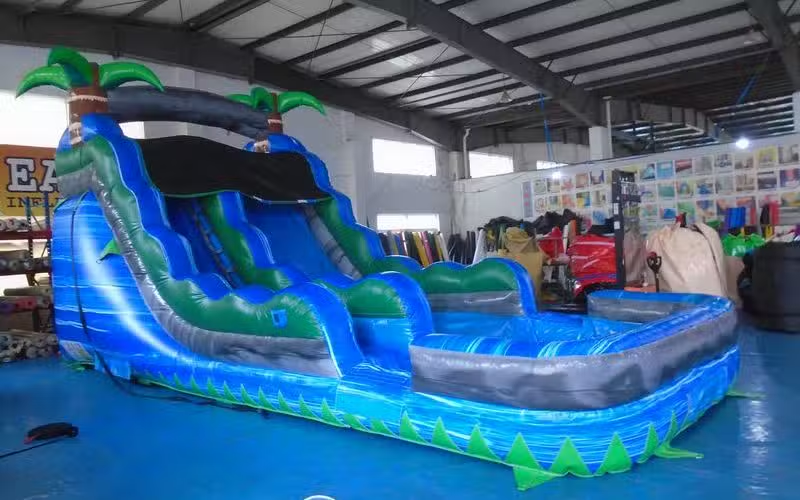
Picking an inflatable water slide size isn’t about going “as big as possible.” The right size is the one you can set up reliably, run safely, and book consistently—without turning every job into a space, power, or labor problem.
Use these 7 practical rules to choose the right inflatable water slide size for your U.S. market customers or rental operation.
Rule 1) Measure the usable setup area, not the “yard size”
Before you look at any dimensions, measure what you can actually use:
- Flat, stable ground space (length × width)
- Overhead clearance (trees, wires, roof lines)
- Access path (gates, side yards, tight turns)
- Slope and drainage (water pooling changes everything)
Practical tip: If a slide “barely fits,” it usually becomes a headache. Plan for a buffer around the unit for safe entry/exit and anchoring.
Rule 2) Match slide height to your typical audience
Height drives the “wow factor”—but it also affects comfort, supervision, and who will actually use it.
A simple way to think about it:
- Younger kids: lower heights feel exciting without being intimidating
- Older kids: mid-height slides are usually the best balance
- Teens & adults: taller designs can make sense when you have the space and staffing
Always follow the manufacturer’s guidance for user age/height and supervision requirements.
Rule 3) Choose your goal: fast throughput or big visual impact
Two slides can have similar footprints but perform very differently at events.
- If you want faster lines and more riders per hour, look for:
- easy climb
- smooth transitions
- landing area that keeps people moving
- If you want a premium “photo moment”, larger/taller units can deliver—but expect:
- longer setup time
- more space requirements
- more staff attention
For many operators, a highly bookable mid-size slide often beats a massive slide on ROI.
Rule 4) Don’t ignore weight, roll size, and real-world handling
A slide can look perfect online and still be a pain to transport and set up.
Confirm these before you buy:
- Unit weight
- Rolled dimensions
- Recommended crew size
- Whether your team can reposition it on site
Rule of thumb: Pick a size you can set up in normal conditions—not just on a perfect day with extra hands.
Rule 5) Power and water logistics set a hard limit
Bigger slides often mean:
- higher blower demand
- more water flow to keep lanes slick
- more runoff management
Check:
- Your typical power source (household circuits vs generator)
- Hose reach and water pressure consistency
- Where the water drains during a 2–4 hour event
If your common venues have limited power/water, choosing a slightly smaller size can prevent cancellations and complaints.
Rule 6) Anchoring rules decide what “fits” in the real world
A slide that “fits” dimensionally may not be practical if you can’t anchor it correctly.
Think about where you’ll use it:
- Grass/soil: staking is usually straightforward (when permitted)
- Concrete/turf/indoors: you’ll rely on sandbags/weights and safe tie-down points
- Some venues restrict staking (schools, parks, city events)
Choose a size you can anchor safely in your most common locations.
Rule 7) Buy the most bookable size before the biggest size
If you’re buying your first (or next) water slide, prioritize the size that:
- fits the widest range of backyards and venues
- works with your usual crew size
- doesn’t require special power solutions
- still looks great in photos and videos
A simple growth plan that works well:
- Start with a highly bookable mid-size slide
- Add a larger “premium” slide later as an upsell option
This keeps your first purchase earning consistently while you expand pricing tiers.
Quick cheat sheet: how to choose faster
- Limited space + small crew: go smaller/mid for easier handling and more bookings
- Mixed ages + most events: mid-size is usually the best balance
- Large events + teens/adults: larger units shine (if power, space, and staffing support it)
FAQ
What’s the most common mistake when choosing slide size?
Buying based on photos alone and not planning for access, power, anchoring, and runoff. Those factors often matter more than height.
Is bigger always more profitable?
Not always. Many operators make better money with a size that books more often, fits more venues, and needs fewer staff to run.
What info should I prepare before asking a supplier for recommendations?
Your usable setup space, typical user age range, access path width, venue surface types (grass/turf/concrete), and your power/water situation.
Final takeaway
The right inflatable water slide size is the one you can deploy confidently, run safely, and book often. Choose for real-world setup and repeatability, then scale up once your market demand and logistics support it.
If you share your available space (L×W), typical age group, and power/water conditions, you can usually narrow down to 2–3 ideal size ranges quickly.